What is SIEM and why do you need it?
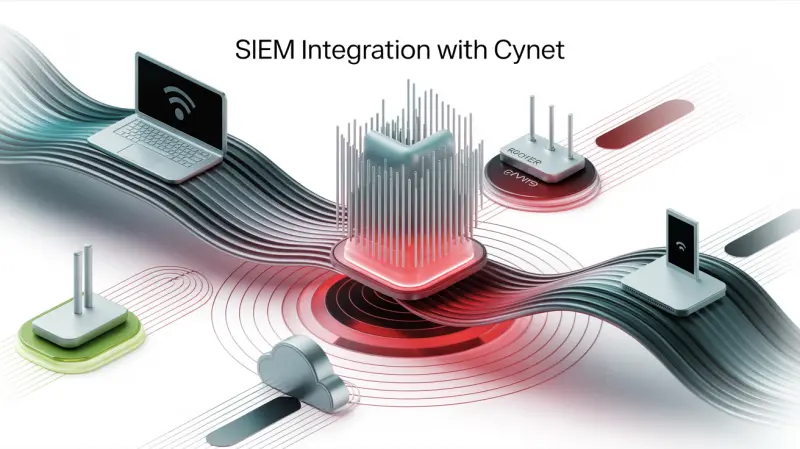
First, let's understand what SIEM is. SIEM (Security Information and Event Management) is a system designed to collect, analyze, and correlate security data from various sources within an organization. These sources may include:- Network equipment: routers, switches, firewalls
- Servers: operating systems, applications, databases
- Endpoints: computers, laptops, mobile devices
- Intrusion Detection Systems (IDS/IPS)
- Antivirus software
- Other security systems
Benefits of using SIEM:
- Improved threat detection: SIEM allows you to identify complex attacks that may go unnoticed by other means.
- Centralized security management: SIEM provides a single interface for monitoring and managing the security of the entire organization.
- Compliance: SIEM helps organizations comply with regulatory requirements such as PCI DSS, HIPAA, and GDPR.
- Incident response automation: SIEM can automate some aspects of incident response, such as blocking users or isolating infected systems.
- Improved reporting: SIEM provides detailed reports on the security status of the organization, which can be used to assess risks and improve security policies.
Typical mistakes when implementing SIEM:
- Insufficient planning: before implementing SIEM, it is necessary to carefully plan what data will be collected, what correlation rules will be used and how incident response will occur.
- Incorrect configuration: incorrect SIEM configuration can lead to important events being missed, and false positives distracting from real threats.
- Insufficient staff qualifications: effective use of SIEM requires specialists with knowledge in security, networks and system administration.
- Ignoring analysis results: SIEM is useless if the analysis results are not used to take measures to improve security.
Cynet Integration with SIEM Systems
Cynet offers a comprehensive cybersecurity platform that includes various components such as Endpoint Detection and Response (EDR), Network Detection and Response (NDR), User and Entity Behavior Analytics (UEBA), and Automated Incident Response . Integrating Cynet with SIEM systems allows you to combine security data collected by the Cynet platform with data from other sources, providing a more complete picture of threats and simplifying incident response. Cynet integration with SIEM can be implemented in various ways, including:- Via API: Cynet provides an API that allows SIEM systems to directly receive security data collected by the Cynet platform.
- Through SIEM connectors: Cynet also offers ready-made SIEM connectors for popular SIEM systems such as Splunk, QRadar and SentinelOne.
- Via Syslog format: Cynet can send security data in Syslog format, which is supported by most SIEM systems.
- Improved threat detection: combining Cynet data with data from other sources allows you to identify more complex and hidden threats.
- Faster incident response: integrating Cynet with SIEM allows you to automate some aspects of incident response, such as isolating infected systems or blocking users.
- Centralized security management: integrating Cynet with SIEM provides a single interface for monitoring and managing the security of the entire organization.
- Improved reporting: integrating Cynet with SIEM allows you to create more detailed and informative reports on the security status of the organization.
How to choose a SIEM for integration with Cynet?
When choosing a SIEM system for integration with Cynet, several factors should be considered:- Compatibility: make sure that the selected SIEM system is compatible with Cynet and supports the necessary integration methods (API, connectors, Syslog).
- Functionality: choose a SIEM system that has sufficient functionality to meet your organization's needs, including data collection, analysis, correlation, incident response, and reporting.
- Scalability: choose a SIEM system that can scale to handle the growing volume of security data.
- Price: compare the prices of different SIEM systems and choose the one that fits your budget.
- Ease of use: choose a SIEM system that is easy to install, configure, and use.
Cynet as part of a comprehensive cybersecurity strategy
Integrating Cynet with SIEM is an important part of a comprehensive cybersecurity strategy. However, to ensure maximum protection, other aspects must also be considered, such as:- Regular software updates: make sure that all software, including operating systems, applications, and security systems, is updated regularly to eliminate known vulnerabilities.
- Using strong passwords: use complex and unique passwords for all accounts and change them regularly.
- Employee training: train employees on the basics of cybersecurity, including recognizing phishing emails and other types of fraud.
- Data backup: regularly back up important data and store it in a safe place.
- Using multi-factor authentication: enable multi-factor authentication for all accounts that support it.
- Monitoring and analyzing event logs: regularly review and analyze event logs to identify suspicious activity.
FAQ: Effective SIEM - Cynet Integration for Protecting Your Network
-
What is SIEM and what is it used for?
SIEM (Security Information and Event Management) is a system designed to collect, analyze, and correlate security data from various sources within an organization to detect, prevent, and respond to cyber threats.
-
What are the benefits of using SIEM?
SIEM provides improved threat detection, centralized security management, compliance with regulatory requirements, incident response automation, and improved reporting.
-
What are the typical mistakes made when implementing SIEM?
Typical mistakes include inadequate planning, incorrect configuration, insufficient staff qualifications, and ignoring the results of analysis.
-
What is Cynet integration with SIEM and how is it implemented?
Cynet integration with SIEM allows you to combine security data collected by the Cynet platform with data from other sources for a more complete picture of threats and simplified response. It can be implemented via API, SIEM connectors, or Syslog format.
-
What are the benefits of Cynet integration with SIEM?
Cynet integration with SIEM improves threat detection, speeds up incident response, provides centralized security management, and provides improved reporting.
-
What should be considered when choosing a SIEM for integration with Cynet?
When choosing a SIEM, you should consider compatibility with Cynet, functionality, scalability, price, and ease of use.
-
How does Cynet fit into a comprehensive cybersecurity strategy?
Cynet integration with SIEM is an important part of a comprehensive strategy that also includes regular software updates, the use of strong passwords, employee training, data backup, the use of multi-factor authentication, and event log monitoring.
-
What are the EDR and NDR components of the Cynet platform?
EDR (Endpoint Detection and Response) - detection and prevention of threats on endpoints. NDR (Network Detection and Response) - detection and prevention of threats in the network.
-
What data formats can be used to integrate Cynet and SIEM?
You can use API, SIEM connectors, and Syslog format.
-
What is UEBA and how is it related to Cynet?
UEBA (User and Entity Behavior Analytics) - analysis of user and entity behavior. This is a component of the Cynet platform used to detect anomalous activity.