
For some time now, the conversations we have at NWU have been changing. They are becoming less about technical questions and more about people who suddenly find themselves carrying far more responsibility than they did yesterday. There is usually a sense of urgency in these conversations: fragmented explanations, short pauses between pressing tasks, and a level of tension that is difficult to hide, even behind a professional tone.
“I was asked to take over the IT department after our previous director left. We have several hundred employees, the owners are based abroad, and parts of our infrastructure have changed dramatically in just a few months. I understand that the responsibility is now mine. But where do I even start?”
Stories like this are no longer unusual. For many Ukrainian companies–and increasingly for organizations across the wider region–they have become part of everyday reality. Teams change, expertise is lost, and critical processes are handed over without enough time for a proper transition or knowledge transfer.
At NWU, we know this reality well. Not from presentations or industry reports, but from daily work and real conversations with partners and customers. When experienced specialists leave and responsibilities are passed to those who remain, it is easy to feel as though the entire burden has suddenly shifted onto your shoulders.
And the first thing we want to say–openly and without unnecessary slogans–is this: you are not alone. Even in a complex and far-from-perfect reality, it is possible to regain visibility, restore control, and gradually bring order to cybersecurity.
The Reality of IT: When Responsibility Grows Faster Than Resources
If we look at the situation calmly and without exaggeration, the picture is remarkably similar across many organizations. Teams have become smaller, roles have shifted, and the scope of responsibility has expanded–sometimes gradually, but often significantly.
The people who remain are frequently expected to wear multiple hats at once. They support users, keep systems running, and make decisions that were once discussed and approved by entire teams. In that environment, cybersecurity can easily slip down the priority list–not because it is unimportant, but because there simply is not enough time or attention to dedicate to everything.
The workplace itself has changed as well. Teams are no longer concentrated in a single office. Some employees work remotely, others from different cities or even different countries. Laptops move constantly between locations, networks become more distributed, and maintaining a clear understanding of what is happening across the infrastructure becomes increasingly difficult.
At the same time, employees naturally look for ways to make their work easier. They install convenient tools, rely on familiar cloud services, and sometimes adopt new applications without involving IT. From a human perspective, this is completely understandable. Yet it is often in these small, everyday decisions that new risks begin to emerge.
Eventually, all of these factors combine into something larger than any single problem. What appears is a growing sense of uncertainty. A simple question becomes surprisingly difficult to answer: do we actually have visibility into what is happening across our infrastructure?
And this is where an important distinction emerges. The greatest source of discomfort is rarely the lack of resources or even external circumstances. More often, it is the absence of clarity and control. It is the feeling of not knowing what truly matters, what can be ignored, and whether the situation is genuinely under control.
That is usually the point where the desire for change begins–not radical change or another large-scale transformation project, but practical, manageable improvements that gradually restore visibility, confidence, and a sense of stability in day-to-day operations.
There Comes a Point When You Realize: Something Has to Change
This realization rarely arrives as a dramatic decision or a defining moment. More often, it feels like a quiet pause–a moment when accumulated fatigue stops hiding behind daily tasks and can no longer be dismissed as background noise.
You open yet another presentation or receive another email promoting a “comprehensive solution,” and the same thought returns: more promises, more implementation phases, more integrations, more configuration, and more resources that you simply do not have right now.
And that is when it becomes clear that the challenge is not really about technology or vendors. It is about the reality organizations face every day–a reality where there is little room for lengthy experiments, complex architectures that depend on a single specialist, or projects that require constant manual attention. A reality where every new project competes for time that is already in short supply.
Gradually, the objective becomes surprisingly simple: you are no longer looking for the best solution on the market. You are looking for a solution that can work in your environment today–one that does not leave you wondering every morning whether something important has slipped through the cracks again.
You stop searching for systems that require constant supervision, complicated rule sets, and endless fine-tuning. Instead, the goal becomes reducing the number of pressure points and allowing technology to take over some of the routine work involved in maintaining visibility and control.
This is where the criteria begin to change. Industry rankings and well-known names become less important. The real question becomes much more practical: will this actually work in an environment where resources are limited, there is no dedicated security team monitoring events around the clock, and nobody has time to investigate every alert individually?
At that point, the phrase “works out of the box” starts to mean something very different. It is no longer a marketing slogan. It becomes a measure of whether a solution can fit into a real-world environment–imperfect, understaffed, constantly changing–and begin delivering value without months of preparation.
And that is often when organizations start paying attention not only to features, but to the overall approach behind them. Not to promises of a perfect future state, but to the possibility of moving forward with greater confidence, greater clarity, and far less day-to-day stress.
What Security Looks Like When It Doesn’t Demand Constant Attention
The most noticeable changes do not appear in dashboards or reports. They appear much earlier–in everyday work.
At some point, you realize that cybersecurity is no longer a constant source of tension. Not because it has become less important, but because it no longer requires your continuous attention.
Instead of a collection of disconnected tools, each generating its own alerts, notifications, and exceptions, there is a single system working as a coordinated whole. It does not demand attention every few minutes. It does not force you into a constant cycle of reacting to events. It works predictably and helps maintain visibility and control.
Even familiar areas begin to feel different. Email is no longer viewed as an uncontrolled source of risk. Attachments and links are inspected automatically, and many dangerous scenarios can be identified and stopped before they have a chance to develop.
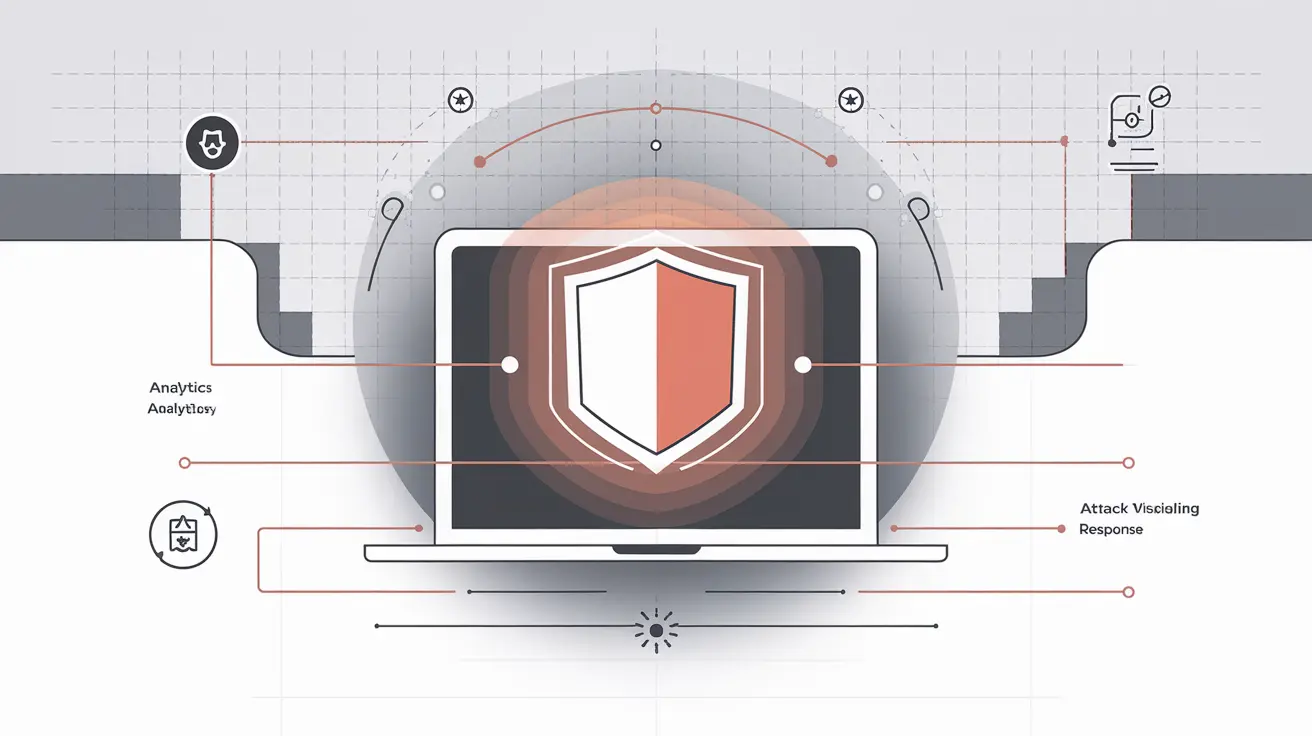
The same applies to endpoints. Laptops connecting from home offices, coworking spaces, customer sites, or other countries no longer become blind spots. They become part of a unified environment where events, user behavior, applications, and identities are continuously analyzed and correlated.
Naturally, this raises an important question: where does this sense of control actually come from? The answer goes beyond marketing language or technical buzzwords.
Control emerges when security stops being a collection of separate products and starts functioning as a single system–when individual events are connected into a coherent picture instead of remaining isolated alerts.
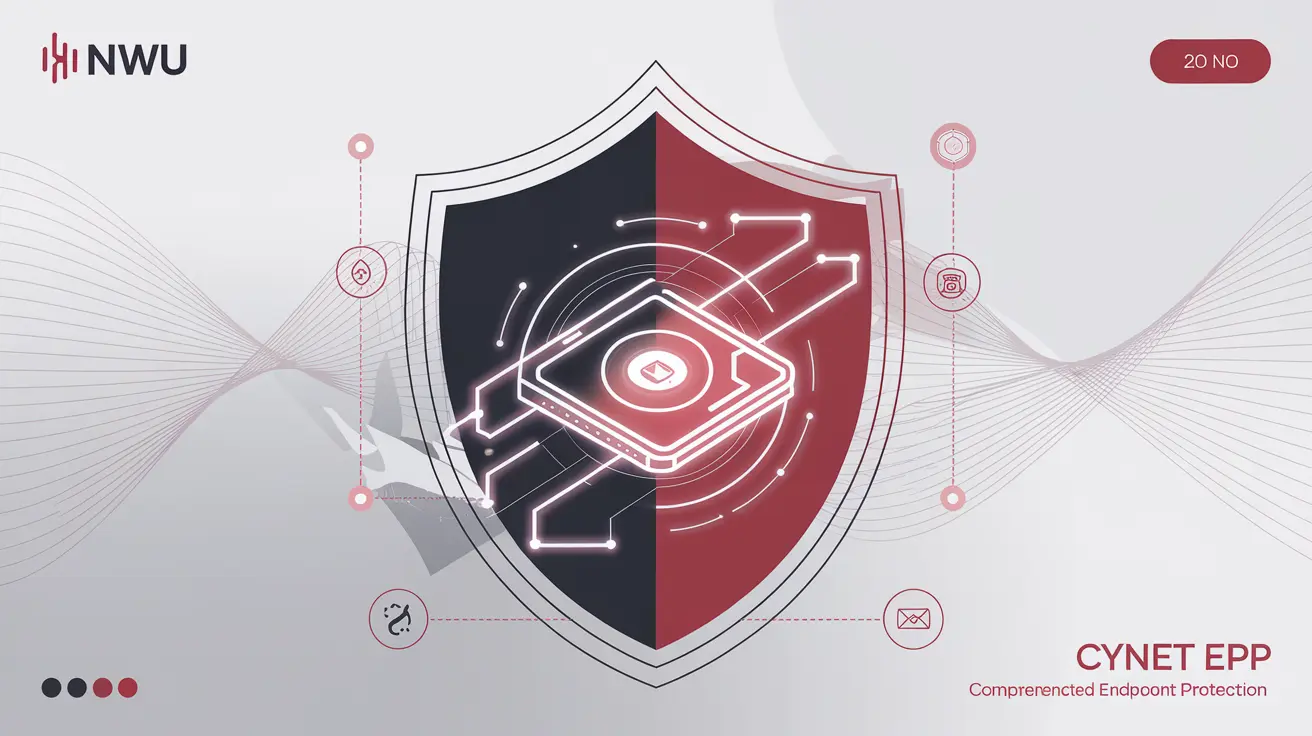
This is the principle behind Cynet 360 AutoXDR. It is not simply another antivirus product or another management console, but a unified platform where multiple security technologies work together, share context, and reinforce one another.
In practical terms, this means the focus shifts away from individual files or isolated alerts and toward the overall behavior of the environment. The platform continuously analyzes applications, users, endpoints, and identities, making it possible to identify unusual activity before it develops into a serious incident.
Its next-generation protection capabilities go beyond traditional signature-based detection by analyzing process behavior. Endpoint protection components provide visibility into the full chain of events–what happened before an incident, how it developed, and what consequences it could have led to. Additional layers of protection include deception technologies designed to detect unauthorized activity at very early stages.
Most importantly, these capabilities do not operate as separate modules that require extensive integration projects. Detection, analysis, and response are already connected.
That is why people often describe the platform as something that “works out of the box.” Not because it is simplistic, but because it is designed to become effective in a real-world environment without months of preparation and customization.
And perhaps the most important change is this: control no longer means keeping everything in your head or checking every alert personally. It means understanding what is happening across your infrastructure even when your attention is needed elsewhere.
This is not a promise of perfect security or a world without risk. It is the ability to stop facing every alert, every suspicious event, and every potential incident alone. There is a system working alongside you–one that helps you see, understand, and respond.
And yet, after this conversation, another perfectly reasonable question almost always follows: what do we already have in place today?
“What Do We Already Have?” – The Question You Can’t Avoid
At some point–usually after the first conversations and a period of reflection–a question emerges that feels both completely logical and strangely reassuring: what do we actually have in place already?
After all, security rarely starts from zero. Something was implemented years ago, something was configured, and something was purchased with the best of intentions at a time when it seemed sufficient for the challenges ahead.
And that is perfectly normal. The problem is not the absence of security tools. The real question is whether those tools still match the reality your organization operates in today.
More often than not, the conversation begins with a familiar name: Microsoft Defender. For many organizations, Defender represents the baseline level of protection that already comes with Microsoft 365. And there is nothing wrong with that. Defender is capable of detecting threats, collecting security telemetry, and generating valuable alerts.
But over time, another reality becomes clear. A single tool is only one part of a broader security strategy.
It may detect an event and raise an alert. The next question, however, is who will investigate it, understand the context, and decide what should happen next–especially if the alert appears in the middle of the night, during a holiday, or at a moment when your team is focused on other critical priorities.
This is where many organizations begin to feel the gap. The technology is there, but the responsibility still rests on the same shoulders.
When looking for alternatives, attention often turns to the industry’s biggest names–platforms such as CrowdStrike, SentinelOne, and others with strong reputations and impressive capabilities. These are powerful, mature solutions. In organizations with dedicated security teams, established processes, and sufficient resources, they can deliver tremendous value.
The important question, however, is not how capable a platform is on paper. The important question is whether your organization has the time, people, and operational capacity to take full advantage of those capabilities. Even the strongest technology cannot eliminate the workload if there is no one available to work with it consistently.
There is also another category of solutions–the traditional “heavyweight” platforms that require dedicated infrastructure, servers, maintenance, and ongoing operational effort. At one point, such systems were a perfectly reasonable choice. Over time, however, they can become another source of complexity in environments where stability and simplicity are already in short supply.
This is where the conversation stops being purely technical. The difference between solutions becomes practical rather than architectural. The question is no longer which platform looks stronger in a presentation or which vendor has the more recognizable name. The question is much simpler: will it work in your environment?
Will it work without building another team, without months of deployment and tuning, and without requiring constant manual attention? Because in the end, that is often what matters most.
When You’re Not Alone: What 24/7 SOC Really Means
At some point, it becomes clear that technology alone is not enough. Even the best security platform stops being a source of confidence if, at the critical moment, it simply generates an alert–and everything that follows still depends on you.
Most security tools can detect events. Some do it exceptionally well. But there is a significant gap between “the system detected something unusual” and “the incident was investigated and the appropriate action was taken.” Someone has to bridge that gap.
And in many organizations, that responsibility still falls on the same person.
Over time, it becomes clear that the challenge is not a lack of technology. The challenge is that responsibility cannot remain concentrated in one place indefinitely–even when that person is experienced, capable, and committed to keeping everything under control.
That is why a 24/7 Security Operations Center often feels less like another feature and more like a practical source of support. Not because someone else is taking over your job, but because security stops being a one-person responsibility.
With Cynet, this role is performed by the CyOps team–a group of security professionals who continuously monitor activity, analyze behavior, and help ensure timely response when something requires attention.
When suspicious activity appears, it is not left waiting until the next business day. When behavior deviates from the norm, it is investigated. When an incident requires action, response procedures can begin immediately rather than waiting for someone to find the time to log in, review alerts, and determine what happened.
Another important change happens gradually: conversations with management become simpler. Instead of explanations such as “we didn’t see it” or “it was difficult to detect,” discussions are based on facts: what happened, how it was identified, and what actions were taken.
This is not about heroics, and it is not about total control. It is about knowing that your security operation is not standing still while your attention is focused elsewhere.
Not replacing your team. Working alongside it.
About Budget, Costs, and the Conversation Nobody Really Wants to Have
Sooner or later, every discussion about technology reaches a point where the technical details have to be set aside and a much simpler–yet often more difficult–topic comes into focus: cost.
Not because the numbers are unclear. Not because budgets are mysterious. But because security investments often require the same conversation to be repeated over and over again, particularly in organizations that have already invested in security before.
An antivirus solution was purchased years ago. Email protection was added later. Additional tools followed over time–each one solving a specific problem and each one making perfect sense when it was introduced.
The challenge is that security environments tend to grow layer by layer. Eventually, organizations find themselves managing multiple tools, multiple consoles, multiple vendors, and multiple sources of alerts–all while still struggling to answer a simple question: do we actually have the visibility and control we need?
That is why conversations about Cynet rarely begin with the idea of buying another security product. They usually begin with an assessment of what already exists. What tools are currently deployed? How many of them are there? How well do they work together? Do they provide meaningful visibility into what is happening across the environment?
At some point, the discussion shifts. It stops being about adding another expense and becomes a conversation about simplifying the overall approach: replacing fragmented functionality with a more unified platform, reducing operational complexity, and decreasing dependence on specialized skills that are increasingly difficult to hire and retain.
The tone changes as well. Instead of comparing license lists, organizations begin discussing outcomes. Instead of abstract threats, they focus on realistic scenarios. Instead of asking for additional budget, they evaluate how security supports business continuity and operational stability.
In this context, Cynet is not about adding another layer. It is about reducing unnecessary complexity: fewer separate tools, more automation, less routine work, and more time for the priorities that actually require human attention.
And perhaps most importantly, the conversation moves beyond the simple question of whether security tools exist. The real question becomes whether those tools work together effectively and provide the visibility needed to make informed decisions.
For business owners and executives, this is often the most compelling argument of all. The goal is not to create a perfect security environment. The goal is to keep the business operating reliably while ensuring that risks remain visible, understandable, and manageable.
At NWU, we understand the realities in which these decisions are made. That is why we work closely with vendors and partners to find practical ways forward–approaches that allow organizations to evolve gradually, without disruptive changes and without placing unnecessary pressure on budgets.
Because security conversations postponed today often return at the least convenient moment tomorrow.
Understanding the Limits: No Perfect Picture
Whenever a conversation starts sounding too smooth, a natural question eventually appears: what are the trade-offs?
Because experience teaches us that perfect solutions without limitations exist mostly in presentations. Real-world environments are always more complex. That is why it makes sense to discuss the boundaries of any platform openly and without fine print.
Cynet is no exception.
First, the platform interface and communication with the vendor’s support and security teams are conducted in English. For some organizations, this may initially seem inconvenient, particularly if they have traditionally worked with local vendors or native-language interfaces.
In practice, however, this tends to be less significant than expected. The platform is designed to be straightforward to navigate, and the real value lies not in the language of the interface but in the platform’s ability to detect threats, analyze activity, and support effective response.
Another important point concerns scope. Cynet is not designed to replace traditional MDM or UEM platforms, nor is it intended to provide detailed administrative control over every aspect of endpoint management.
Its primary focus is different: endpoint protection, identity security, threat detection, incident response, and operational visibility.
For many organizations, this proves to be the right priority: first establish visibility and control, then optimize and expand.
Scale is another consideration. Cynet is designed for organizations of a certain size and includes minimum licensing requirements that reflect that focus. For companies with hundreds of users, this is typically not a limitation but rather an indication of the environments the platform was built to support.
None of these points are hidden conditions. They are simply part of an honest understanding of what the platform is designed to do–and where it delivers the greatest value.
Cynet does not promise a perfect picture. What it offers is a practical balance between capability, operational effort, and the realities of modern IT environments. And in many organizations, that balance turns out to be far more valuable than perfection.
No Disruption Required: How It Usually Starts

Once a solution stops being an abstract idea and becomes part of a real conversation, most organizations want the same thing: a starting point that does not create another source of stress.
No disruption, no sudden changes, and no feeling that a new major project has just landed on someone’s desk.
That is why, in practice, the process usually begins gradually. No one expects you to abandon existing tools overnight. No systems need to be switched off. No final decisions have to be made in the first week.
Instead, there is an opportunity to step back and look at the environment from a different perspective–without pressure and without urgency.
In many cases, this begins with a pilot deployment. The platform is introduced alongside existing security controls and starts collecting information, analyzing activity, and building visibility into the environment.
The organization continues operating as usual, with the same people, the same processes, and the same priorities. The difference is that a new layer of visibility begins to emerge.
Over time, things become visible that previously disappeared into the background noise. What emerges are real events, risks, and behavioral patterns that can be observed, investigated, and explained rather than assumptions or intuition.
That is not always comfortable, but it creates something far more valuable: a foundation for informed decisions. The conversation gradually shifts from assumptions to evidence.
Another important outcome follows: reporting becomes easier. Not because there is more data, but because the information becomes easier to understand.
Instead of navigating technical details, management gains a clearer picture of what is happening, where the risks exist, and what is already under control–without dramatization and without excuses.
Only after that does it make sense to discuss next steps. Perhaps the deployment should be expanded. Perhaps existing processes should be adjusted. Or perhaps the pilot simply confirms that the organization already has a stronger level of visibility than expected.
The important point is that decisions can be made based on facts rather than assumptions.
And throughout the process, you are not expected to handle everything alone. The work typically involves partners, integrators, and the IT professionals who already understand your environment and your business.
Gradually, the constant cycle of “what if?” scenarios begins to fade. In its place comes something far more useful: a clearer understanding of what is actually happening and the confidence that the situation is no longer slipping out of your hands.
Instead of a Conclusion
You are not alone–not as a slogan or a reassuring phrase, but because responsibility for cybersecurity does not mean carrying every challenge on your own.
Control is not about perfect protection or eliminating every possible risk. It is about being able to work without constant uncertainty, understanding what is happening across your environment, and having support when it matters most.
If you would like to see what this could look like in your own organization–without commitments, without disruptive changes, and without the pressure to make immediate decisions–start with a conversation. Talk to us or speak with your trusted IT partner.
The goal is not to change everything overnight. The goal is to gain clarity, confidence, and a stronger foundation for the decisions ahead.
We are here when you need us. And with the right visibility, support, and approach, cybersecurity can become far more manageable than it may seem today.