
As cyber threats grow in complexity, traditional SIEM systems are no longer sufficient. New-Scale SIEM offers the scalability, analytics, and automation needed to protect your business. This article will help you calculate and justify the budget for New-Scale SIEM, focusing on the total cost of ownership (TCO).
What is New-Scale SIEM and how does it differ from traditional SIEM?
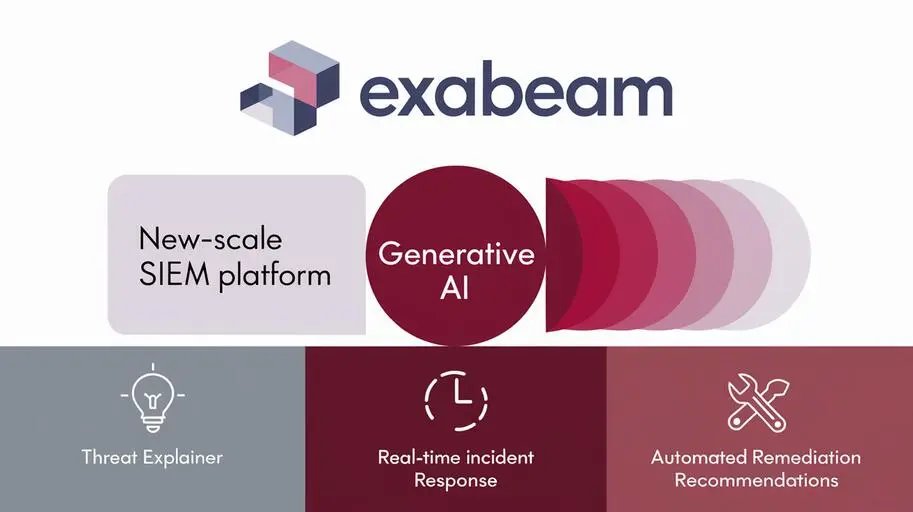
New-Scale SIEM is the next generation of SIEM solutions designed to address the problems faced by traditional systems. It is characterized by the following key features:
- Scalability: The ability to process huge volumes of data from various sources, including cloud environments, IoT devices, and traditional systems.
- Advanced Analytics: Using machine learning and behavioral analysis to detect complex and unknown threats that traditional SIEM systems may miss.
- Automation: Automating routine tasks such as data collection and analysis, incident response, and reporting, which reduces response time and improves the efficiency of security analysts.
- Behavioral Analysis: Creating baseline profiles of user and asset behavior to identify anomalies that may indicate the presence of threats.
Comparison of New-Scale SIEM and Traditional SIEM
Traditional SIEM systems often face the following problems:
- Complexity: Difficult to configure, manage, and use, requiring significant effort and skilled personnel.
- High Cost: High licensing, infrastructure, and maintenance costs.
- Limited Functionality: Limited ability to detect complex and unknown threats, requiring integration with other security tools.
New-Scale SIEM, on the other hand, offers the following advantages:
- Improved Threat Detection: Thanks to advanced analytics and behavioral analysis, New-Scale SIEM allows you to detect a wide range of threats, including those that may be missed by traditional systems.
- Reduced Incident Response Time: Automation of tasks allows you to more quickly identify, investigate, and remediate security incidents.
- Cost Reduction: Optimizing resource utilization and automating tasks reduces the overall cost of ownership of the SIEM system.
Benefits of New-Scale SIEM in terms of threat detection effectiveness and risk minimization
New-Scale SIEM provides more effective threat detection and risk minimization through:
- Improved Visibility: Provides complete visibility of all security events in the organization, including cloud environments and IoT devices.
- Proactive Threat Detection: Identifies threats at an early stage, before they can cause damage.
- Accelerated Incident Investigation: Provides security analysts with all the information they need to investigate incidents quickly and efficiently.
- Automated Incident Response: Automatically responds to security incidents, reducing the risk of damage.
TCO Components for New-Scale SIEM: A Detailed Cost Breakdown
The total cost of ownership (TCO) of New-Scale SIEM includes all costs associated with the acquisition, deployment, maintenance, and use of the system throughout its life cycle. It is important to consider all TCO components when planning a SIEM budget.
Licensing
The cost of licensing New-Scale SIEM can vary greatly depending on the licensing model you choose. The most common licensing models include:
- Data Volume Based: The cost of the license depends on the amount of data processed by the SIEM system. This model is suitable for organizations with a predictable amount of data.
- User Based: The cost of the license depends on the number of users who have access to the SIEM system. This model is suitable for organizations with a large number of users but a relatively small amount of data.
- Device Based: The cost of the license depends on the number of devices that are connected to the SIEM system. This model is suitable for organizations with a large number of devices, such as IoT devices.
- Feature Package Based: The cost of the license depends on the selected feature package. This model is suitable for organizations that only need a specific set of features.
When choosing a licensing model, it is important to consider your organization’s current and future security needs. You should also consider the flexibility of the licensing model so that you can easily scale the system as your organization grows.
Pros and Cons of Different Licensing Models
| Licensing Model | Pros | Cons |
|---|---|---|
| Data Volume Based | Transparency, Cost Predictability | Can be expensive with rapid data growth |
| User Based | Simplicity, suitable for organizations with a large number of users | Can be expensive with a small amount of data per user |
| Device Based | Suitable for organizations with a large number of devices | May not be beneficial with a small amount of data per device |
| Feature Package Based | Flexibility, the ability to select only the necessary functions | May be more expensive if additional features are needed over time |
Recommendation: Carefully analyze your needs, determine the amount of data and the approximate number of users (or devices) to choose the optimal licensing model. Request trial licenses from SIEM system vendors to evaluate different models.
Infrastructure
Deploying New-Scale SIEM requires a certain infrastructure, which may include:
- Hardware: Servers, data storage, network equipment.
- Cloud Resources: Computing power, data storage, network services.
Infrastructure requirements depend on the amount of data that needs to be processed, as well as the deployment model chosen (on-premises, cloud, hybrid). Cloud solutions often avoid significant capital expenditures on hardware. Consider using existing resources if they meet the SIEM system requirements.
Estimated Infrastructure Cost Calculations
Example calculation for an organization with an average volume of data (100 GB per day):
- On-Premises Deployment:
- Servers: $10,000 – $20,000
- Storage: $5,000 – $10,000
- Cloud Deployment:
- Computing Power: $1,000 – $3,000 per month
- Data Storage: $500 – $1,500 per month
These figures are approximate and may vary depending on the specific needs of your organization.
Personnel
Operating New-Scale SIEM requires qualified personnel, including:
- Security Analysts: Responsible for monitoring security events, investigating incidents, and responding to threats.
- Engineers: Responsible for configuring, maintaining, and supporting the SIEM system.
Personnel costs include salaries, training, and certification. Task automation in New-Scale SIEM can reduce the need for personnel.
Personnel Cost Assessment
Approximate estimate of annual personnel costs:
- Security Analyst: $80,000 – $120,000
- Engineer: $90,000 – $130,000
It is recommended to estimate the required number of personnel and their qualifications depending on the complexity of your infrastructure and security needs.
Integration
New-Scale SIEM needs to be integrated with existing security systems, such as:
- Firewall: To obtain network traffic data.
- IDS/IPS: To detect intrusions and attacks.
- Endpoint Security: To monitor events on endpoints.
Integration costs may include consulting, setup, and custom integration development. Consider the availability of ready-made integrations with the security systems you use.
Integration Cost Assessment
Approximate estimate of integration costs:
- Consulting: $5,000 – $15,000
- Setup: $2,000 – $5,000
- Custom Integration Development: Depends on the complexity of the integration
Clarify the possibility of using ready-made connectors and APIs to simplify and reduce the cost of integration.
Maintenance and Support
Maintenance and support costs for New-Scale SIEM include:
- Updates: Receiving new versions of software with bug fixes and new features.
- Troubleshooting: Solving problems that arise during system operation.
- Technical Support: Getting help from the SIEM system vendor.
Find out what maintenance and support terms the supplier offers and include these costs in your budget. Pay attention to the response time of the support service and the availability of qualified specialists.
Maintenance and Support Cost Assessment
Approximate estimate of annual maintenance and support costs: 15-20% of the license cost.
Hidden Costs
When planning a New-Scale SIEM budget, it is important to consider possible hidden costs that can significantly increase TCO:
- Additional Modules: Purchasing additional modules to expand the functionality of the SIEM system.
- Increased Data Volume: An increase in the volume of data requiring processing may require the purchase of additional licenses or hardware.
- Scaling: Expanding the system to support the growth of your organization may require additional infrastructure and licensing costs.
- Training: Retraining personnel due to new features or changes in the system.
Forecast growth needs and include a reserve budget for possible additional expenses. Consider scalable solutions that allow you to flexibly adapt to changing requirements.

Calculating TCO for New-Scale SIEM: A Practical Guide
For an accurate calculation of TCO for New-Scale SIEM, it is necessary to collect information about all the above-mentioned cost components and take into account the specific features of your organization.
Step-by-Step TCO Calculation Guide
- Determine the amount of data that the SIEM system needs to process. This will help you choose the optimal licensing model and estimate infrastructure requirements.
- Estimate the number of users who will use the SIEM system. This will also affect the choice of licensing model and the estimation of personnel costs.
- Determine the necessary roles and skills for operating the SIEM system. This will allow you to estimate personnel costs (salaries, training).
- Estimate the infrastructure costs required to deploy the SIEM system. Consider the costs of hardware, cloud resources, and network equipment.
- Estimate the costs of integrating the SIEM system with existing security systems. Consider the costs of consulting, setup, and custom integration development.
- Estimate the costs of maintaining and supporting the SIEM system. Consider the costs of updates, troubleshooting, and technical support.
- Consider possible hidden costs, such as the purchase of additional modules, increased data volume, and scaling.
- Add up all the costs to get the total cost of ownership of the SIEM system.
TCO Calculation Table Template
| Cost Component | One-time Costs | Annual Costs | Notes |
|---|---|---|---|
| Licensing | $XXX | $XXX | Licensing Model: [specify the selected model] |
| Infrastructure | $XXX | $XXX | Hardware/Cloud Resources |
| Personnel | $XXX (training) | $XXX (salaries) | Number of analysts, engineers |
| Integration | $XXX | Consulting, setup | |
| Maintenance and Support | $XXX | % of license cost | |
| Hidden Costs | $XXX (reserve) | Additional modules, scaling | |
| Total | $XXX | $XXX |
Accounting for Specific Infrastructure and Business Requirements
When calculating TCO, it is necessary to take into account the specific features of your infrastructure and business requirements. For example, if your organization uses cloud services, you should consider the cost of cloud resources. If your organization operates in an industry with stringent regulatory requirements, you should consider the cost of complying with those requirements.
Optimizing New-Scale SIEM Costs
There are various ways to optimize New-Scale SIEM costs:
- Choose the optimal licensing model. Compare different licensing models and choose the one that best suits your needs.
- Automate tasks. Automating routine tasks can reduce the need for personnel and reduce incident response time.
- Train personnel. Trained personnel can use the SIEM system more effectively and solve problems independently.
- Use ready-made integrations. Using ready-made integrations can simplify and reduce the cost of integrating the SIEM system with existing security systems.
- Regularly evaluate the effectiveness of the SIEM system. Regularly evaluating the effectiveness of the SIEM system allows you to identify areas where you can improve performance and reduce costs.
Justifying the New-Scale SIEM Budget: ROI and Financial Metrics
After calculating TCO, it is necessary to justify the New-Scale SIEM budget to the company’s management. To do this, calculate ROI (Return on Investment) and demonstrate the potential benefits of implementing the system.
Calculating ROI for New-Scale SIEM
ROI is calculated using the formula:
ROI = (Benefits – Costs) / Costs
Benefits of implementing New-Scale SIEM include:
- Risk Reduction: Preventing losses from cyberattacks.
- Increased Threat Detection Efficiency: Faster and more accurate threat detection.
- Reduced Incident Response Time: Faster and more effective incident response.
- Compliance with Regulatory Requirements: Ensuring compliance with regulatory requirements in the field of security.
Potential Benefits of Implementing New-Scale SIEM
ROI calculation example:
- Costs (TCO over 3 years): $300,000
- Assessment of prevented losses from cyberattacks: $500,000
- ROI = ($500,000 – $300,000) / $300,000 = 67%
This example shows that investing in New-Scale SIEM can provide a significant return on investment.
The Importance of New-Scale SIEM for Compliance
Many industries are governed by stringent security regulatory requirements, such as GDPR, HIPAA, and PCI DSS. Implementing New-Scale SIEM can help organizations meet these requirements and avoid penalties for non-compliance.
Arguments for Justifying the New-Scale SIEM Budget to Company Management
When justifying the New-Scale SIEM budget to company management, the following arguments should be presented:
- The growing complexity of cyber threats: Modern cyber threats are becoming increasingly complex and sophisticated. Traditional SIEM systems are no longer able to detect them.
- The need to protect critical data: Cyberattacks can lead to the leakage of confidential data, which can cause serious damage to your organization.
- Compliance with regulatory requirements: Implementing New-Scale SIEM can help your organization comply with regulatory requirements in the field of security and avoid penalties for non-compliance.
- Improving business efficiency: New-Scale SIEM can help your organization improve business efficiency by reducing risks, increasing the effectiveness of threat detection, and reducing incident response time.
Conclusion
New-Scale SIEM is a necessary tool for ensuring the security of a modern organization. Careful TCO calculation and justification of the New-Scale SIEM budget will help you make an informed decision about investing in the security of your organization.
We encourage purchasing managers and financial directors to make an informed decision about investing in New-Scale SIEM to protect their business from modern cyber threats.
Frequently Asked Questions about New-Scale SIEM: Budget and TCO
What is New-Scale SIEM and how does it differ from traditional SIEM?
New-Scale SIEM is a next-generation SIEM designed to address the problems of traditional SIEMs. It is characterized by scalability, advanced analytics, automation, and behavioral analysis for more effective threat detection.
What are the key advantages of New-Scale SIEM over traditional SIEMs?
New-Scale SIEM offers improved threat detection, reduced incident response times, and lower costs through automation and resource optimization, in contrast to the complexity, high cost, and limited functionality of traditional SIEMs.
What components are included in the Total Cost of Ownership (TCO) of New-Scale SIEM?
The TCO for New-Scale SIEM includes costs for licensing, infrastructure (hardware or cloud resources), personnel, integration with existing security systems, maintenance and support, as well as possible hidden costs.
What licensing models are available for New-Scale SIEM, and which one should I choose?
Licensing models are available based on data volume, number of users, number of devices, and feature package. The choice depends on your organization's needs: determine the amount of data, number of users/devices, and required features to choose the optimal model.
How do I estimate personnel costs for operating New-Scale SIEM?
Estimate the required number of security analysts and engineers, considering the complexity of your infrastructure and security needs. Consider salaries, training, and staff certification.
How can I optimize New-Scale SIEM costs?
You can optimize costs by choosing the optimal licensing model, automating tasks, training staff, using pre-built integrations, and regularly evaluating the effectiveness of the SIEM system.
How do I calculate the Return on Investment (ROI) for New-Scale SIEM?
ROI is calculated as (Benefits - Costs) / Costs. Benefits include reduced risks, improved threat detection, reduced incident response times, and compliance with regulatory requirements.
How do I justify the budget for New-Scale SIEM to management?
Justify by highlighting the increasing complexity of cyber threats, the need to protect critical data, compliance with regulatory requirements, and increased business efficiency through the implementation of New-Scale SIEM.