
Microclimate Control in Small Offices: Simple Solutions for Comfortable Work
Small offices often lack the sophisticated ventilation and air conditioning systems found in large corporate buildings. This can lead to uncomfortable conditions for employees, negatively impacting their productivity and well-being. However, even without expensive equipment, there are effective and relatively inexpensive ways to improve the microclimate in a small office space.
Problem: Why Does Microclimate Matter?
Poor air quality, excessive heat or cold, high or low humidity - all these factors significantly affect people's health and work capacity. Studies show that an uncomfortable microclimate can cause:
- Decreased concentration and productivity.
- Headaches and fatigue.
- Spread of respiratory diseases.
- Allergic reactions.
- Irritability and mood deterioration.
Creating a healthy and comfortable work environment is an investment in your employees and the success of your business. Even small changes can have a significant positive effect.
Simple Solutions for Improving Microclimate
Let's consider a few affordable and effective ways to control the climate in a small office:
1. Ventilating the Room
Regular ventilation is the simplest and at the same time one of the most important ways to improve air quality in the office. Open windows several times a day, especially in the morning and evening, to ensure a flow of fresh air. Organize cross-ventilation to make the air circulate more efficiently.
When and How to Ventilate:
- Early in the morning: Before the start of the working day, to refresh the air after the night.
- During lunch break: Ventilation helps to dissipate the accumulation of carbon dioxide and other pollutants.
- At the end of the working day: Prepare the room for the night.
- After long meetings: In a room where many people have been, the concentration of carbon dioxide increases rapidly.
- Avoid ventilation during peak air pollution hours: In cities, this is usually the morning and evening rush hours.
It is important to consider weather conditions. In hot days, ventilation can lead to overheating of the room, and in cold weather - to hypothermia. Therefore, adjust the intensity and duration of ventilation depending on the temperature outside.
2. Temperature Control
Maintaining a comfortable temperature in the office is the key to productive work. The optimal temperature for most people is 22-24°C. The following can be used to regulate the temperature:
Temperature Control Options:
- Fans: The simplest and most affordable way to cool the room.
- Air conditioners: Effective for cooling, but it is important to use them correctly to avoid catching a cold. Set the temperature a few degrees lower than outside and clean the filters regularly.
- Heaters: For heating, use safe heaters with a thermostat to maintain a stable temperature.
- Blinds or curtains: Help regulate the inflow of sunlight and prevent overheating of the room in summer.
Consider the individual needs of employees. Someone may be more comfortable working in a slightly warmer or cooler room. Provide the possibility of individual regulation (e.g., desk fans or extra blankets).
3. Air Humidification
Dry air can cause discomfort, especially during the heating season. Use humidifiers to maintain an optimal humidity level (40-60%).
Types of Humidifiers:
- Ultrasonic humidifiers: Operate quietly and efficiently.
- Traditional humidifiers: Evaporate water naturally.
- Humidifiers-air purifiers: Clean and humidify the air at the same time.
Clean the humidifier regularly to prevent the growth of bacteria and fungi. If you do not have a humidifier, you can use simpler methods: place bowls of water or hang wet towels.
4. Air Purification
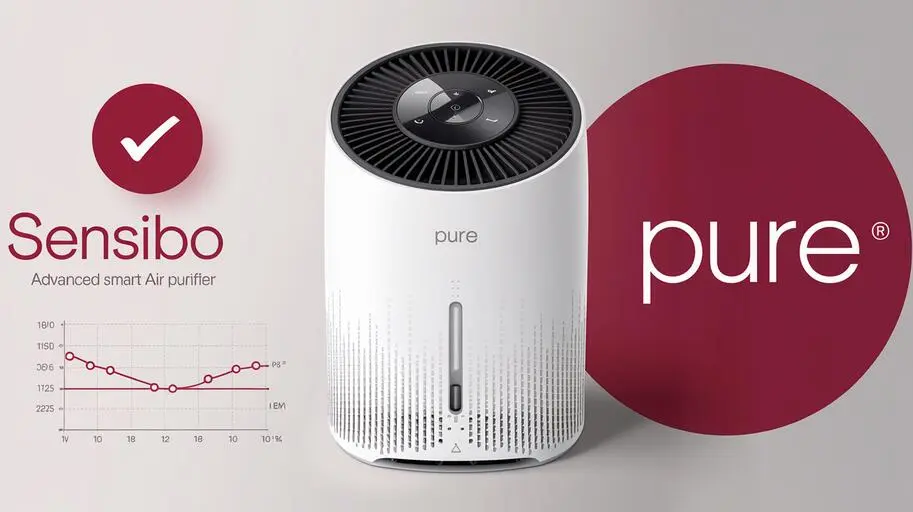
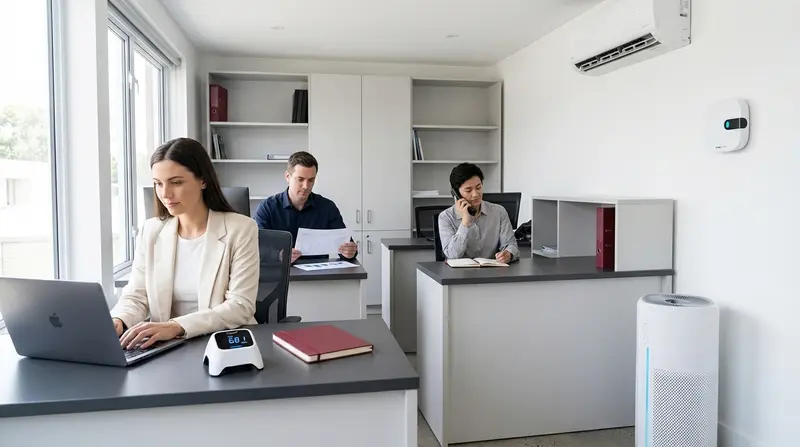
Office air often contains dust, allergens, bacteria, and other pollutants. Air purifiers with HEPA filters will help improve air quality and reduce the risk of disease.
How to Choose an Air Purifier:
- Pay attention to the area of the room: The purifier should be designed for the volume of your office.
- Choose purifiers with HEPA filters: They effectively trap fine particles of dust and allergens.
- Pay attention to the noise level: The purifier should not interfere with work.
- Change filters regularly: Dirty filters lose their effectiveness.
In addition to air purifiers, regularly do wet cleaning to reduce the amount of dust.
5. Indoor Plants
Indoor plants not only decorate the office but also improve air quality. They absorb carbon dioxide and release oxygen, and some of them are even able to filter harmful substances from the air.
Plants That Improve Air Quality:
- Sansevieria (snake plant): Very unpretentious and effectively cleans the air from formaldehyde and other harmful substances.
- Spathiphyllum (peace lily): Moisturizes the air and filters toxins.
- Chlorophytum (spider plant): Easy to care for and cleans the air well from carbon dioxide and formaldehyde.
- Aloe vera: Has medicinal properties and cleanses the air from benzene and formaldehyde.
Take care of the plants properly so that they do not become a source of allergens or fungi.
6. Lighting
Insufficient or incorrect lighting can cause eyestrain, headaches, and reduced productivity. Optimal lighting is a combination of natural and artificial light.
Lighting Tips:
- Use natural light: Place workplaces near windows.
- Choose the right lamps: Prefer lamps with neutral or warm light.
- Provide sufficient brightness: The lighting should be bright enough not to strain the eyes.
- Avoid glare: Use blinds or curtains to regulate the inflow of sunlight and prevent glare on monitor screens.
Provide individual lighting for each employee so that they can adjust the brightness and direction of light.
7. Regular Cleaning
Regular cleaning is an important part of maintaining a healthy microclimate in the office. Dust, dirt, and other pollutants can cause allergies and respiratory diseases.
Cleaning Recommendations:
- Wet cleaning: Do wet cleaning of floors and surfaces at least once a week.
- Vacuum carpets and upholstered furniture: Regularly vacuum carpets and upholstered furniture to remove dust and mites.
- Dust: Regularly dust furniture, appliances and other surfaces.
- Ventilate the room during cleaning: Ventilate the room during and after cleaning to remove odors of detergents.
Use environmentally friendly detergents to avoid polluting the air with harmful chemicals.
8. Control of Air Pollution Sources
There may be various sources of air pollution in the office, such as:
- Printers and copiers: Emit ozone and other harmful substances. Place them in well-ventilated rooms.
- Furniture and finishing materials: May release formaldehyde and other volatile organic compounds. Choose furniture and materials with low emissions.
- Tobacco smoke: Prohibit smoking in the office and near the entrance.
- Chemical substances: Avoid using chemicals with a strong smell, such as paints, varnishes, and solvents.
Identify the sources of air pollution in your office and take measures to eliminate or minimize them.
9. Microclimate Monitoring
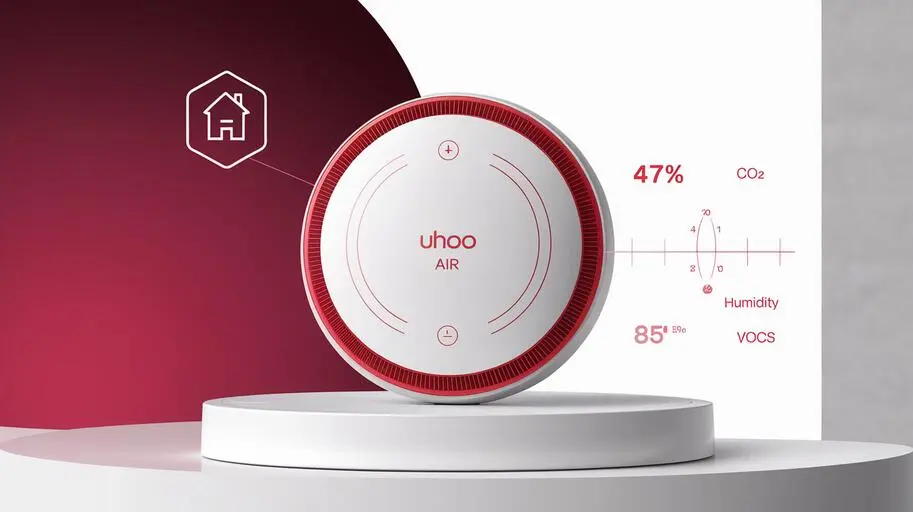
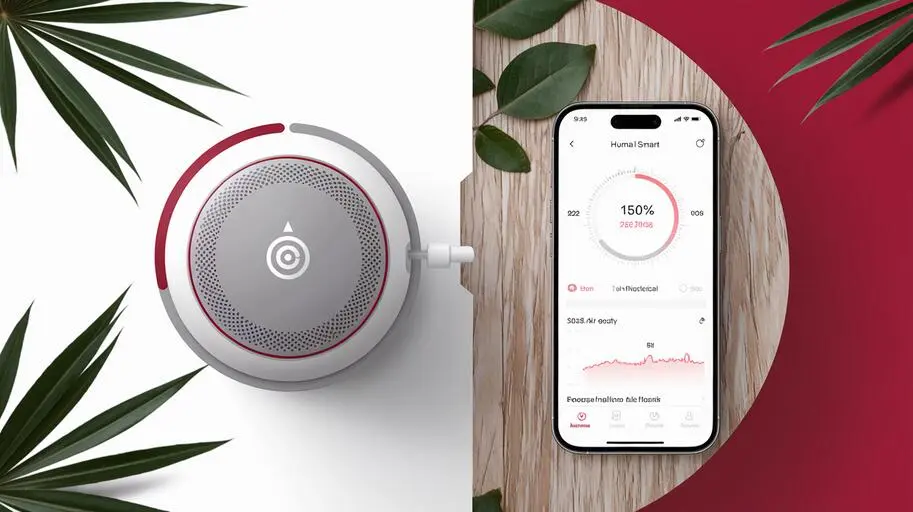
For effective microclimate control in the office, it is important to regularly monitor temperature, humidity, and air quality. There are special devices (weather stations) for measuring these parameters. They allow you to respond to changes in a timely manner and maintain comfortable conditions for employees.
What Weather Stations Measure:
- Temperature: It is important to maintain an optimal temperature to avoid overheating or hypothermia.
- Humidity: Too high or too low humidity can cause discomfort and health problems.
- Air quality: Measuring the level of carbon dioxide, dust and other pollutants allows you to assess air quality and take measures to improve it.
Analyze monitoring data and make adjustments to the climate control system in a small office.
10. Employee Engagement
Creating a comfortable microclimate in the office is a shared responsibility. Involve employees in the process, consider their wishes and suggestions. Conduct surveys on the comfort of working conditions and take measures to solve problems.
How to Engage Employees:
- Conduct surveys: Regularly collect feedback from employees about the comfort of working conditions.
- Encourage initiatives: Encourage employees to propose solutions to improve the climate in a small office.
- Inform about changes: Inform employees about changes in the microclimate control system in the office and their justification.
Joint efforts will help create a comfortable and healthy working environment for everyone.
Summary
Even in a small office without complex engineering systems, you can create a comfortable microclimate. Regular ventilation, temperature and humidity control, air purification, indoor plants, proper lighting, regular cleaning, elimination of pollution sources, parameter monitoring, and employee involvement are simple and effective ways to improve working conditions and increase productivity.
Invest in the health and comfort of your employees, and it will definitely pay off.
Frequently Asked Questions on How to Create a Comfortable Microclimate in the Office Without High Costs
Why control the microclimate in the office at all?
Poor air quality, excessive heat or cold, high or low humidity negatively affect the health and productivity of employees, causing decreased concentration, headaches, fatigue, and the spread of respiratory diseases.
How often should the office be ventilated?
It is recommended to ventilate the room several times a day, especially in the morning, during lunch break, and at the end of the working day. It is also worth ventilating after long meetings.
What is the optimal air temperature in the office for comfortable work?
The optimal temperature for most people is 22-24°C. It is important to consider the individual needs of employees and provide the possibility of individual adjustment.
How to humidify the air in the office? What are the options?
To humidify the air, you can use ultrasonic, traditional humidifiers, or air-washing humidifiers. If there is no humidifier, you can place bowls of water or hang wet towels.
Which plants are best for purifying the air in the office?
Sansevieria (snake plant), Spathiphyllum (peace lily), Chlorophytum (spider plant), and Aloe vera effectively purify the air from harmful substances.
How often should the office be cleaned to maintain a healthy microclimate?
It is recommended to do wet cleaning of floors and surfaces at least once a week, regularly vacuum carpets and upholstered furniture, and wipe dust from furniture, equipment, and other surfaces.