
Overpayment for Electricity Due to Incorrect Temperature Control: Where Businesses Lose Money Daily
In today's business world, every penny counts. This is especially felt now, when the cost of energy is constantly increasing. Have you ever wondered how much a comfortable temperature in your office costs? The answer may surprise you, because often it is the incorrect operation of climate equipment that entails significant, but seemingly invisible, financial losses.
This article is your guide to the world of energy saving. We will analyze how careless attitude to the choice of temperature regime and air conditioning settings can lead to significant overspending of electricity, and also offer practical solutions for optimizing the operation of heating and cooling systems.
Problem: How Incorrect Climate Control Eats Up Your Profit
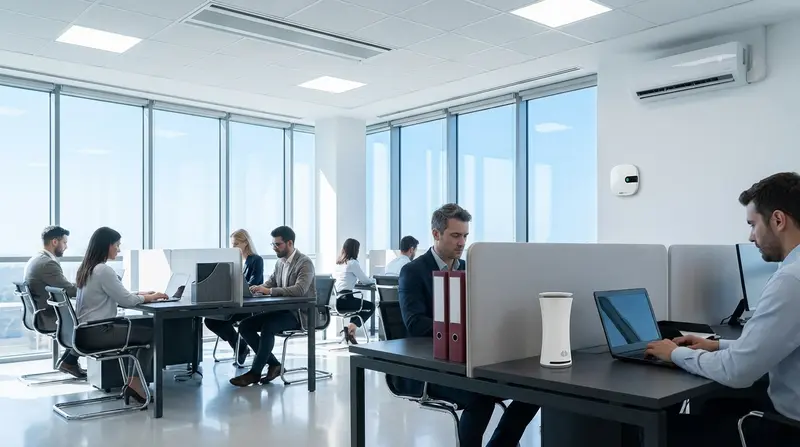
Imagine a typical office. Employees are working, computers are humming, and the air conditioner is diligently cooling the air. Everything seems to be fine. But, looking closely, you can notice several alarming signals:
- Too low a temperature in the summer, when employees are forced to wear sweaters to avoid freezing.
- Excessive heat in the winter, with open windows to at least ventilate the room a little.
- The air conditioner is running on weekends or at night when no one is in the office.
- Lack of a clear system for regulating the temperature in different areas of the office.
Each of these situations is a direct path to inefficient use of energy and, as a result, an increase in your bills. But why is this happening?
Reasons for Inefficient Climate Control
There are several key factors that lead to increased electricity costs:
- Human factor: Different perceptions of comfortable temperature among different people. What is comfortable for one may be too hot or cold for another. This often leads to constant temperature adjustments, which are not always optimal.
- Incorrect equipment settings: Insufficient knowledge or lack of clear instructions regarding the operation of climate equipment. Incorrect operating modes are often used, which consume significantly more energy than necessary.
- Outdated equipment: Outdated models of air conditioners and heating systems have significantly lower energy efficiency than modern ones. They require more energy to achieve the same temperature.
- Lack of automation: Manual temperature control and the lack of automated control systems lead to uncontrolled energy overconsumption.
- Poor thermal insulation: Insufficient thermal insulation of the building leads to heat or cold easily escaping outside, forcing the heating or cooling system to operate at full capacity to maintain the desired temperature.
Consequences of Uncontrolled Climate Control
Underestimating the problem of inefficient climate control can have serious consequences for your business:
- Unjustified increase in electricity bills.
- Reduced employee productivity due to uncomfortable temperature conditions.
- Rapid equipment wear due to constant operation at maximum power.
- Negative impact on the company's image as a socially responsible and environmentally friendly organization.
Solution: How to Optimize Climate Control and Save Money
Fortunately, there are many effective ways to optimize climate control in your office and significantly reduce electricity costs. Here are some proven strategies:
1. Optimizing the Settings of Existing Equipment
The first step to saving is correctly setting up existing equipment. Often, only a few simple changes are enough to achieve a significant effect.
Setting the Optimal Temperature
This is one of the most important factors. The optimal temperature in the office in summer is 22-25 degrees Celsius, and in winter - 20-23 degrees. Every degree below or above these values can lead to a significant increase in energy consumption.
Using Timers and Controllers
Program air conditioners and heating systems to operate only during working hours. Use timers and controllers to automatically turn off equipment on weekends and at night. Many modern models have built-in programming functions that allow you to set a schedule for the week ahead.
Using Energy-Saving Modes
Most modern air conditioners have energy-saving modes, such as "Automatic mode" or "Sleep mode". Use them to reduce energy consumption without compromising comfort.
Regular Equipment Maintenance
Regular maintenance, including cleaning filters and checking for leaks, will ensure efficient equipment operation and extend its service life. Dirty filters can increase energy consumption by 5-15%.
2. Replacing Outdated Equipment
If your equipment is outdated, replacing it with modern energy-efficient models can be a profitable investment. New models consume significantly less energy and have advanced control features.
Choosing Energy-Efficient Equipment
Pay attention to the equipment energy efficiency class. Choose models with a high energy efficiency class (A+++ or A++). Although they may be more expensive, the savings on electricity will eventually compensate for the difference in price.
Using Inverter Air Conditioners
Inverter air conditioners are more economical than conventional ones because they regulate the compressor power depending on the need for cooling or heating. This allows them to operate more smoothly and efficiently, consuming less energy.
Installing Modern Heating Systems
Replace outdated boilers and radiators with modern high-efficiency heating systems. Perform regular maintenance to ensure optimal operation.
3. Automating Climate Control
Automating climate control is one of the most effective ways to maintain optimal temperature and reduce electricity costs.
Installing a "Smart Home" System
"Smart Home" systems allow you to centrally manage climate equipment, lighting and other devices in the office. They can automatically adjust the temperature depending on the time of day, the number of people in the room, and other factors.
Using Temperature and Humidity Sensors
Temperature and humidity sensors can automatically regulate the operation of air conditioners and heating systems, maintaining comfortable conditions and preventing overheating or overcooling of the room.
Integration with Building Management Systems (BMS)
Integration of the climate system with the building management system (BMS) allows you to optimize energy consumption based on data on the use of premises, weather conditions and other factors.
4. Improving Building Thermal Insulation
High-quality building thermal insulation is an important factor for reducing heat and cold losses and saving on heating and air conditioning.
Insulating Walls, Roof and Floor
Insulating walls, roof and floor will help keep heat in during the winter and cool in the summer, reducing the load on the heating or cooling system.
Replacing Windows with Energy-Saving Ones
Energy-saving windows have a low heat transfer coefficient and help reduce heat loss in the heating season.
Sealing Windows and Doors
Sealing windows and doors will help prevent drafts and heat or cold loss.
5. Training Staff
Training staff in the rules of energy-efficient equipment use can also have a significant impact on reducing electricity costs.
Conducting Training and Briefings
Conduct training sessions and briefings for employees on the rules for using climate equipment and the importance of saving energy.
Creating an Incentive System
Create an incentive system for employees who actively contribute to saving energy.
Posting Information Materials
Post information materials about the importance of saving electricity in the office to constantly remind employees of the need to be careful with resources.
Summary: Savings Begin with Responsibility
Implementing these simple but effective strategies can significantly reduce electricity costs in your office and make your business more environmentally responsible. Remember that energy saving is not only a financial benefit, but also a contribution to preserving the environment for future generations. Don't let incorrect temperature regimes eat up your profits - start acting today!
Frequently Asked Questions about Overpayment for Electricity: How Temperature Eats Up Business Money
Why does improper temperature control lead to overpayment for electricity?
Incorrectly configured climate control systems, such as excessively low temperatures in summer or excessive heat in winter, force equipment to work more intensively, leading to inefficient energy use and increased electricity bills.
What are the main causes of inefficient climate control in offices?
The main reasons include: human factor (different perceptions of comfortable temperature), incorrect equipment settings, outdated equipment, lack of automation, and insufficient thermal insulation of the building.
What is the optimal temperature to maintain in the office in summer and winter to save electricity?
The optimal temperature in the office in summer is 22-25 degrees Celsius, and in winter - 20-23 degrees. Each degree of deviation can lead to a significant increase in energy consumption.
What steps can be taken to optimize existing climate equipment and reduce electricity costs?
It is recommended to set the optimal temperature, use timers and controllers to operate the equipment only during working hours, use energy-saving modes, and regularly maintain the equipment, including cleaning the filters.
What are the advantages of replacing outdated climate equipment with modern energy-efficient models?
Modern energy-efficient models consume significantly less energy, have advanced control functions, and can significantly reduce electricity costs in the long term. The use of inverter air conditioners is particularly advantageous.
How does climate control automation help reduce electricity costs?
Climate control automation, for example, using a "smart home" system, allows centralized control of climate equipment, automatically adjusts the temperature depending on various factors, and optimizes energy consumption.